JINAN TRUCKMAN AUTOMOBILE CO.,LTD


TRUCKMAN International Sales Center
- WhatsApp: +86 18615693883

- E-mail: contact@truckmanauto.com
SALES DEPARTMENT 1
Contact Person: Eric GAO
- WhatsApp: +86 15665736726

E-mail: eric@truckmanauto.com
Contact Person: Angela WANG
- WhatsApp: +86 19153136362

E-mail: angela@truckmanauto.com
Contact Person: Luna LIU
- WhatsApp: +86 19153138337

E-mail: luna@truckmanauto.com
SALES DEPARTMENT 2
Contact Person: Tyne GUO
- WhatsApp: +86 15330633674

E-mail: tyne@truckmanauto.com
Contact Person: Scott YANG
- WhatsApp: +86 17615404503

E-mail: scott@truckmanauto.com
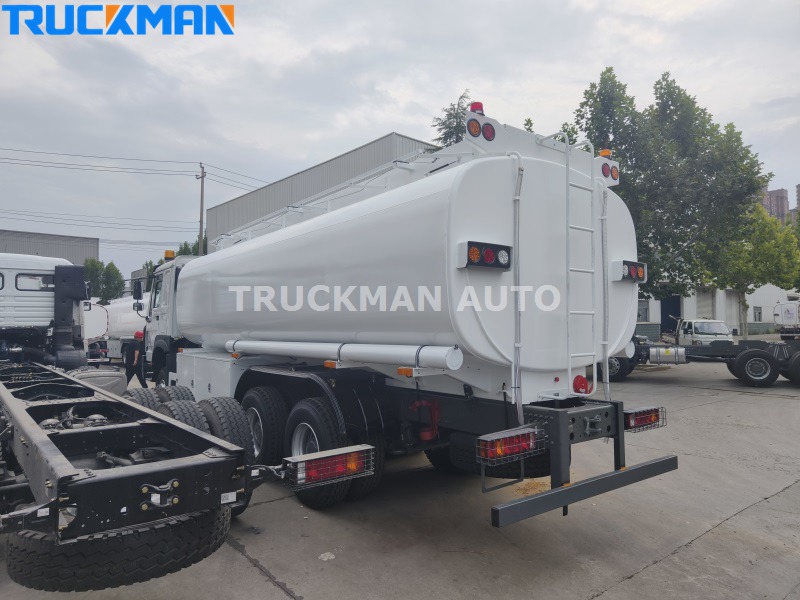
SINOTRUK HOWO 25000 Liters Fuel Tanker Truck For Guinea
Guinea possesses abundant oil resources, with reserves totaling 1.5 billion barrels concentrated primarily in the Fouta Djallon Basin in the country's southwest. These resources have not only generated significant economic benefits for Guinea itself but have also created a new engine for economic growth across the West African region. As oil extraction operations advance, Guinea's oil industry supply chain is also continuously maturing, with rapid development across all stages—from exploration and extraction to processing and export. A local transport company approached us seeking trucks for oil transportation; we recommended the SINOTRUK HOWO fuel tanker truck, which the client found highly appealing and subsequently decided to purchase from us.
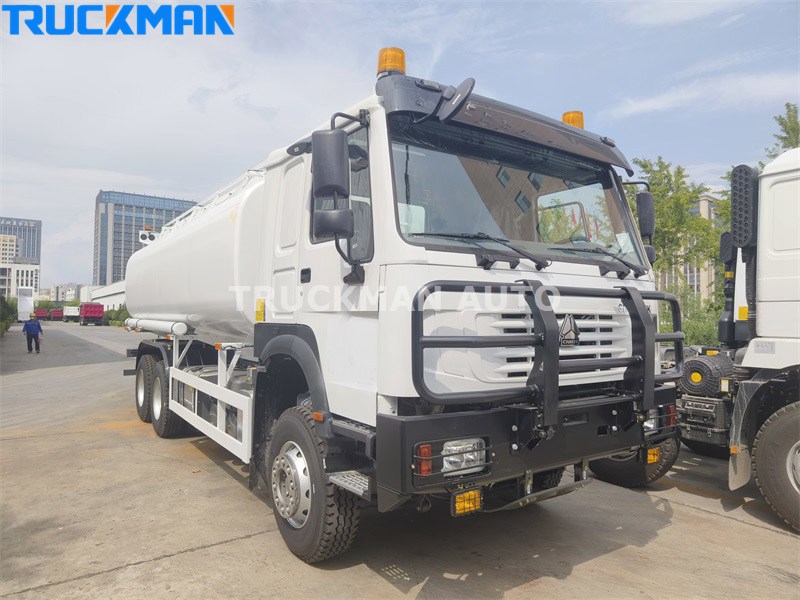
The fuel tanker truck is powered by a 400HP engine that delivers abundant power, outperforming competitors in the same displacement class with superior low-speed, high-torque capabilities. It features rapid response, seamless gear shifting, and smooth power delivery, allowing it to quickly adapt to complex operating conditions. Utilizing a modular and integrated design—such as a one-piece cylinder head and unitized filtration system—the engine is compact and reliable; it supports extended oil change intervals and offers easy maintenance, thereby reducing daily upkeep costs. Built for high durability with a generous design margin, the engine boasts a service life of up to 1.8 million kilometers, maintaining high uptime and low failure rates even under heavy loads and harsh operating conditions.
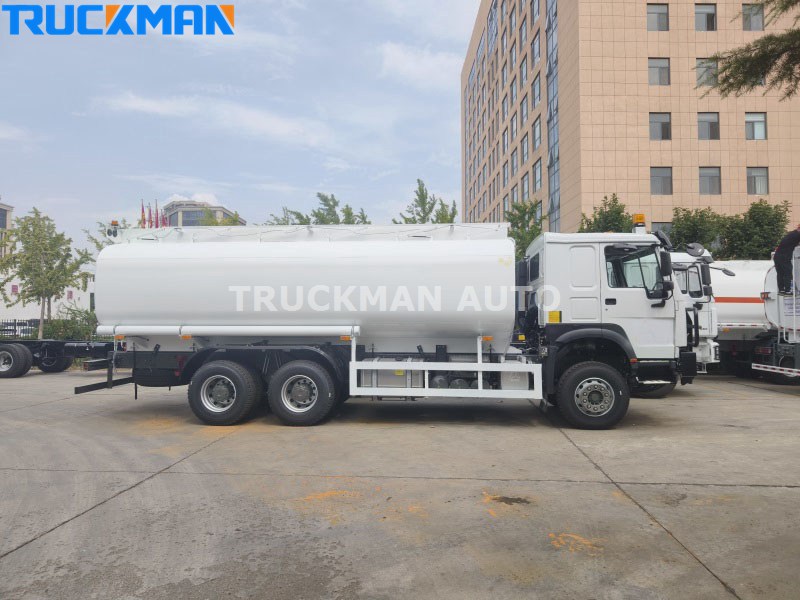
Baffles are installed inside the tanks of tanker trucks to suppress liquid sloshing and prevent structural damage or vehicle instability caused by the impact force of the liquid during sudden braking or cornering. These baffles are evenly spaced along the longitudinal axis of the tank—typically with a spacing of no more than 1,750 mm between adjacent baffles—and possess an effective cross-sectional area equal to at least 40% of the tank's cross-sectional area. Large tanker trucks commonly employ a multi-compartment design featuring partition plates between compartments; this configuration limits the volume of individual compartments to prevent the loss of the entire cargo in the event of a localized leak and helps optimize the vehicle's overall center of gravity.
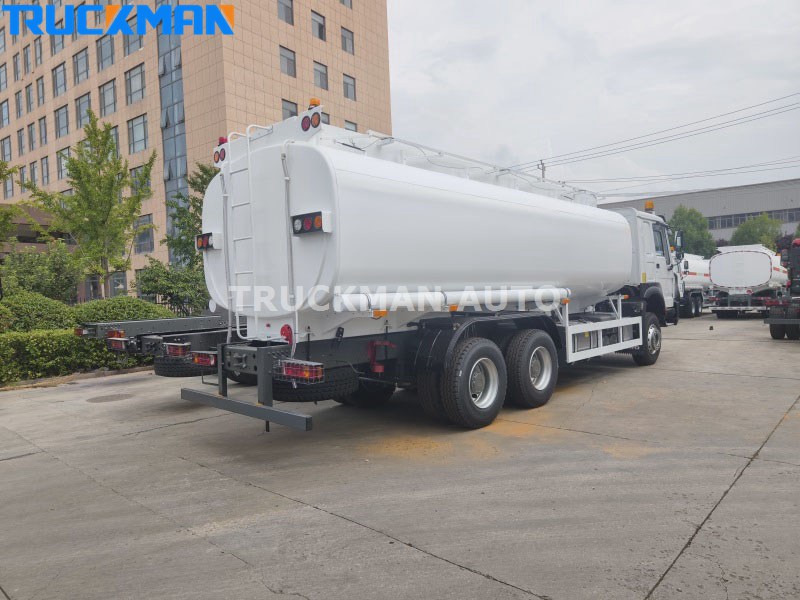
Fuel tanker trucks require stringent safety measures. Safety protocols for loading and unloading are as follows: open flames and ignition sources are strictly prohibited in the loading/unloading area; drivers and operating personnel are forbidden from wearing shoes with iron nails or smoking near the vehicle. A static grounding wire must be connected prior to operations, and flow rates must be controlled (initial speed within 1 m/s, maximum not exceeding 4.5 m/s) to prevent static electricity generation caused by splashing; after operations conclude, a five-minute settling period is required before disconnecting the ground wire. The vehicle engine must be turned off during the process; the loading/unloading nozzle must maintain contact with the tank bottom to avoid sparks caused by impact; and the operation must be closely monitored to prevent spills, overflows, drips, or leaks.